The landscape of corporate conferences, immersive brand activations, and large-scale live entertainment has undergone a dramatic transformation. Modern audiences no longer settle for static stages, generic lighting, and standard audiovisual setups. Instead, they demand fully immersive, multi-sensory experiences that blur the lines between physical architecture and digital innovation. To meet these high expectations, venue developers, event organizers, and experiential designers are turning to a powerful combination: advanced custom fabrication techniques coupled with cutting-edge technology infrastructure.
Building a modern high-tech venue requires a seamless synthesis of physical craftsmanship and advanced technological backbone. Behind every mesmerizing light show, dynamic moving stage, or giant interactive LED display lies an intricate framework of structural engineering, custom-built fixtures, and complex connectivity. Understanding how these two distinct worlds collaborate provides valuable insights for event venue operators, production teams, and business executives who wish to create unforgettable experiences that set new benchmarks for the industry.
Structural Engineering and Tailored Enclosures
Modern event venues require unique physical structures that can support heavy technical infrastructure while offering modular flexibility. Standard off-the-shelf components often fail to meet the specific spatial, aesthetic, and structural requirements of state-of-the-art facilities.
Designing Adaptable Temporary and Permanent Enclosures
When expanding an existing venue footprint or constructing temporary event spaces, designers frequently turn to engineered fabric buildings to create massive, column-free clear-span interiors. These adaptable structure types provide maximum usable floor space, allowing production teams to position heavy staging, lighting rigs, and suspended audio arrays without structural interference. Because they can be deployed quickly and customized to specific climate and acoustic specifications, they serve as excellent solutions for pop-up venues, temporary exhibition halls, and outdoor festival expansions.
Precision Engineering for Heavy Infrastructure Support
High-tech venues routinely suspend thousands of pounds of lighting trusses, video walls, and audio systems from ceiling grids. Partnering with experienced custom metal fabrication companies allows venue developers to design and install high-strength overhead grid systems, custom rigging points, and tailored framework tailored precisely to the building dimensions. These specialized fabricators ensure that every load-bearing element strictly complies with structural safety standards while remaining unobtrusive to the audience eye.
Advanced Fabrication Techniques for Event Architecture
Creating complex, memorable visual elements within a venue relies heavily on specialized manufacturing processes. Custom components allow venues to hide messy cabling, integrate lighting seamlessly into architectural features, and construct custom stage elements.
High-Precision Material Shaping for Architectural Features
Creating intricate architectural accents, custom metallic fascias, and curved mounting rigs for LED tiles requires extreme manufacturing accuracy. Utilizing a professional water jet cutting service enables fabricators to cut complex patterns into steel, aluminum, stone, and composite materials without introducing heat-affected zones that could compromise structural integrity. This cold-cutting method preserves material strength while achieving tight tolerances necessary for flush-fitting modular stage components and custom decorative panels.
Specialized Joining Techniques for Structural Integrity
Every permanent truss extension, custom screen frame, and bespoke stage elevator depends on rock-solid joints. Professional welding services ensure that structural steel and aluminum framework can withstand the dynamic loads and constant mechanical stress generated during high-energy live performances. High-grade welding is equally critical for safety, ensuring that temporary structures and custom-built staging assets maintain complete structural integrity over years of repetitive assembly and disassembly.
Material Sourcing and Turnaround Efficiency
Event timelines are notoriously tight, and venue renovation schedules leave zero margin for error. Establishing strong relationships with reliable local metal suppliers ensures that project engineers and custom fabricators can source specialized alloys, structural tubing, and sheet metal on short notice. Local sourcing minimizes shipping delays, reduces transit costs, and allows fabrication teams to quickly produce replacement parts or last-minute structural modifications during intense venue build-outs.
Integrating High-Tech Broadcast Infrastructure
A truly modern event venue must cater not only to the in-person audience but also to millions of virtual viewers around the globe. Integrating broadcast-grade signal routing and monitoring capabilities directly into the venue architecture is now mandatory.
Low-Latency High-Bandwidth Signal Distribution
To deliver uncompressed 4K and 8K video feeds across vast venue footprints without signal degradation, facilities rely on robust fiber infrastructure. Installing modern broadcast fiber optic solutions throughout the venue creates a future-proof network backbone capable of handling massive data throughput with near-zero latency. By embedding fiber connection points into floor boxes, wall plates, and overhead trusses, venue operators allow visiting production crews to plug in seamlessly without running long, messy cable passes across public walkways.
Precision Monitoring for Live Production Control Rooms
Delivering flawless visual content requires control room operators and broadcast directors to view image feeds with absolute color accuracy and zero frame lag. Integrating high-spec broadcast video monitors into the central control room ensures that technicians can monitor multi-camera feeds, color-grade live signals, and verify content playback in real time. Accurate visual feedback allows control teams to adjust stage lighting, LED screen brightness, and camera exposure dynamically during live events.
Equipment Coordination and Technical Reliability
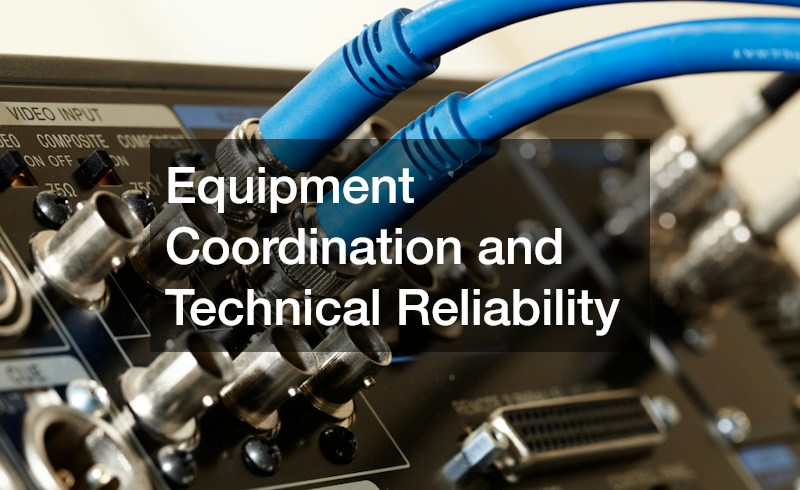
The success of any high-tech event relies on the seamless interplay between hardware, software, and physical support structures. Coordinating complex technical setups requires robust equipment and proactive operational maintenance.
Deploying Professional-Grade Production Hardware
High-impact corporate keynotes and live broadcasts require extreme operational reliability. Investing in top-tier in live production equipment ensures that switchers, media servers, audio processors, and signal converters perform flawlessly under high-stress live conditions. Modern production hardware features redundant power supplies, fail-safe processing channels, and intuitive management interfaces that allow technical directors to execute complex multi-media sequences with complete confidence.
Sustaining Continuous Venue Operations and Reliability
With venues hosting back-to-back events, unexpected hardware failures or mechanical breakdowns can lead to disastrous downtime and severe financial losses. Retaining comprehensive industrial maintenance services ensures that all mechanical systems, automated stage lifts, motorized rigging points, and HVAC systems undergo rigorous routine inspection and preventative care. Professional maintenance crews ensure that the facility operates smoothly, safely, and efficiently through every demanding production cycle.
Sustaining Long-Term Venue Excellence and Infrastructure Scalability
To maintain a competitive edge in an evolving event industry, high-tech venue operators must look beyond immediate operational needs and implement forward-looking maintenance strategies, rigorous safety protocols, and sustainable infrastructure practices. A venue designed for high-density tech integrations requires continuous oversight to preserve structural integrity, maintain broadcast fidelity, and optimize operational costs over decades of heavy utilization.
Establishing Proactive Structural Inspection Frameworks
Overhead rigging, dynamic stage lifts, and heavy architectural displays experience perpetual mechanical stress due to continuous loads, vibration, and thermal expansion. Instituting a routine structural inspection framework ensures that all primary load-bearing welds, custom framework joints, and temporary support trusses undergo regular non-destructive testing and stress analysis. Identifying micro-fractures, hardware wear, or material fatigue early prevents catastrophic structural failures during live events, protects crew and attendees, and extends the operational lifespan of expensive venue infrastructure.
Streamlining Spare Parts Management and Rapid Response Protocol
Event schedules allow zero downtime when critical equipment or custom architectural components fail. Developing a centralized inventory system for specialized structural replacement parts, custom-milled connectors, and spare optical fiber jumpers guarantees rapid repair turnarounds. Establishing pre-negotiated emergency response protocols with regional material distributors and specialized fabrication workshops ensures that custom-machined replacement components can be manufactured and delivered within hours during multi-day conferences or high-profile touring engagements.
Optimizing Energy Efficiency and Sustainable Power Systems
High-output LED walls, intense intelligent lighting fixtures, and powerful media server arrays require enormous power loads, driving up operational expenses and carbon footprints. Venue operators can implement smart power distribution systems that monitor energy consumption patterns across individual zones in real time. Integrating automated power-sequencing units, dynamic thermal management systems, and high-efficiency power supplies reduces idle energy draw, minimizes heat generation, and significantly lowers utility overhead while supporting corporate sustainability mandates.
Protecting High-Value Digital Networks and Fiber Backbones
Physical infrastructure represents only half of a modern venue’s security profile; digital networks routed through underlying fiber backbones face increasing threats from unauthorized access, network overload, and data corruption. Venue operators must implement robust physical and cyber network segmentation protocols. Securing floor boxes, patch rooms, and fiber termination cabinets with electronic access control systems prevents accidental damage or unauthorized hardware tampering, while isolated network VLANs protect broadcast feeds and administrative operations from public guest Wi-Fi traffic.
Standardizing Cross-Discipline Technical Documentation
As venue technologies and custom physical layouts adapt to changing event requirements, maintaining accurate, centralized technical documentation becomes essential. System schematics, structural load maps, fiber patch indices, and fabrication blueprints must be stored in digital repositories accessible to both internal venue technicians and incoming guest production crews. Comprehensive documentation streamlines the onboarding process for visiting production teams, minimizes setup errors, reduces labor costs during load-in, and ensures consistent operational safety across all production disciplines.
Future-Proofing Architectural Layouts for Emerging Spatial Computing
The rapid advance of augmented reality, spatial computing, and volumetric video capture is transforming how live audiences interact with physical event spaces. Venues designed today must incorporate spatial tracking sensors, precise physical anchoring points, and low-latency data channels directly into custom stage architecture. Preparing spatial computing infrastructure during initial design or major renovations allows facilities to seamlessly support interactive holographic displays, real-time camera tracking, and mixed-reality broadcasts without requiring disruptive physical retrofits.
Amplifying Venue Reach Through Integrated Marketing Strategy
The impact of a high-tech event should extend far beyond the physical walls of the venue. Modern venues utilize integrated digital ecosystems to boost attendance, engage remote participants, and maximize sponsor ROI.
Data-Driven Promotion and Audience Engagement
Leveraging sophisticated digital marketing strategies allows venue operators and event producers to target niche audiences, drive ticket sales, and amplify brand presence across digital channels. By capturing real-time audience engagement data during live streams and social media interactions, marketing teams can optimize promotional campaigns on the fly and deliver personalized content experiences to both physical attendees and online viewers.
Strategic Planning for Future-Proof Venue Design
Building or upgrading a high-tech venue requires significant capital investment. To maximize longevity and return on investment, venue owners must adopt a forward-thinking approach that anticipates emerging technology trends and operational requirements.
Designing Modular and Reconfigurable Workspaces
Flexibility is the cornerstone of modern venue design. Fixed architectural elements often limit a venue to specific event types. By incorporating modular staging platforms, moveable partition walls, and flexible overhead grid systems, a single hall can transform from an intimate corporate workshop in the morning to an expansive esport arena by evening. Modular design reduces turnaround time between events, allowing venue operators to maximize booking schedules and drive higher revenue.
Prioritizing Acoustic Treatment alongside Visual Tech
While giant LED screens and dazzling light shows often grab headlines, poor acoustics can ruin an otherwise spectacular event. Sound reflection off hard surfaces, metal trusses, and glass panels can make speech unintelligible and muddy live music performances. High-tech venues must integrate acoustic dampening panels, spatial audio calibration systems, and sound-absorbing structural materials early in the fabrication phase. Balancing high-end visual systems with pristine audio clarity creates a truly immersive environment.
Implementing Redundant Power and Thermal Management
High-performance video walls, powerful lighting rigs, and dense server racks draw massive amounts of electrical power and generate substantial thermal energy. Venues must design robust electrical infrastructure featuring uninterruptible power supply systems and backup generators to protect against sudden utility outages. Additionally, dedicated cooling infrastructure must be engineered directly into equipment enclosures and control rooms to prevent sensitive electronics from overheating during prolonged production cycles.
Establishing Seamless Connectivity for Attendees
High-density wireless connectivity is no longer a luxury; it is a fundamental expectation for attendees who wish to live-stream, post on social media, or participate in interactive event apps. Venues must deploy high-density Wi-Fi networks and distributed antenna systems hidden discreetly within custom architectural fixtures. Designing subtle, integrated mounting solutions for wireless access points ensures strong signal coverage throughout the facility without compromising the clean, high-tech aesthetic of the space.
Operational Synergies Between Craftsmen and Technicians
The physical build of an event venue and its technological integration cannot happen in silos. Success depends entirely on open communication and collaborative planning between structural fabricators, AV integrators, broadcast engineers, and event producers from day one.
Early Stage Collaboration for Integrated Solutions
When custom fabricators work alongside AV systems integrators during the initial design phase, potential structural conflicts are identified and resolved on paper rather than on the job site. For example, custom-fabricated light fixtures can be pre-drilled to accommodate hidden wiring channels, and stage platforms can be engineered with integrated ventilation for embedded media servers. This multidisciplinary cooperation eliminates costly rework, speeds up construction timelines, and results in a cleaner, highly polished final installation.
Training and Long-Term Operational Excellence
Equipping a venue with state-of-the-art technology and custom structural elements is only half the battle. Facilities must invest in ongoing training for internal technical staff to ensure they fully understand how to operate, troubleshoot, and maintain complex custom systems. Standardized operating procedures, comprehensive system documentation, and regular safety drills empower venue crews to deliver flawless events consistently while extending the operational lifespan of expensive infrastructure.
The evolution of modern event spaces demonstrates that physical craftsmanship and advanced technology are deeply intertwined. Custom fabrication provides the structural strength, precision aesthetics, and tailored spatial solutions necessary to house complex technical setups. Meanwhile, cutting-edge broadcast tools, robust signal networks, and dynamic digital systems bring these physical environments to life. By fostering close collaboration between specialized fabricators, technical engineers, and operational teams, venue owners can build versatile, high-impact environments that captivate live audiences and set new standards for experiential entertainment.